How Beijing Thinks About Overseas Chinese and Foreign Influence: Principles and Tactics of United Front Policies
 EMAIL
EMAIL  LIST
LIST 
Amid heightened concerns of authoritarian foreign influence and interference as well as slowly growing awareness of the extent of such activities, Beijing’s interactions with overseas Chinese communities have increasingly come under scrutiny. And for good reason—there are frequent reports of PRC espionage as well as attempts at transnational repression of political dissidents, Hong Kong democracy activists, advocates of Taiwanese and Tibetan independence, Uyghur refugees, and other critics of the Chinese Communist Party.
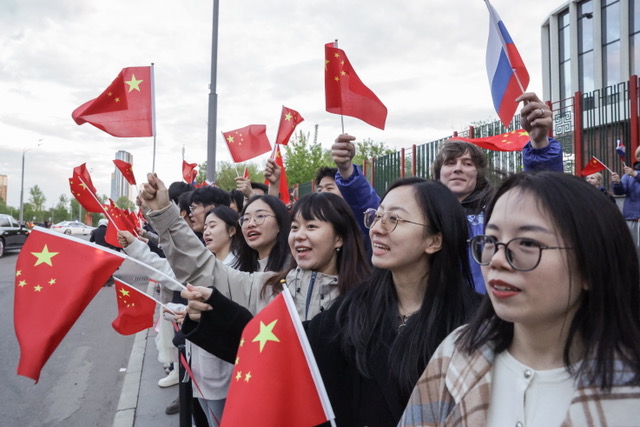
These coercive approaches go hand-in-hand with positive attempts to co-opt the broader Chinese diaspora population—as discussed below, the Chinese government takes an expansive view of who is considered an overseas Chinese, which adds fuel to concerns of political interference. Pro-Beijing diaspora groups have mobilized in the United States and elsewhere to welcome visiting top Chinese leaders, protest Taiwanese leaders, and harass and monitor opponents of the CCP. US law enforcement has charged several ethnic Chinese individuals of acting as spies and agents of the Chinese government, including some with links to US politicians or who have served in government roles. At the local levels, United Front-linked community leaders and organizations have rallied Chinese communities onto the streets to protest local political and social issues, as well as fielded political candidates and mobilized votes to get them into office.1
Of course, overseas Chinese communities are far from homogenous. Diversity in backgrounds and beliefs can potentially complicate the Chinese government’s efforts to shape the behavior of these diaspora populations. But Beijing’s diaspora policies remain far-reaching in their ambition, scale, and scope. These policies are also not new. While overseas Chinese were denigrated as rightists and capitalists during the Cultural Revolution (which saw the closure of diaspora and many other outward-facing institutions), by and large the Chinese government has placed high value and priority on managing relations with these communities, albeit for varying strategic reasons across time. In the aftermath of the Chinese Civil War, the CCP and the KMT (Kuomintang) competed for diaspora loyalty to legitimize their claims to rule China.2 From the reform era, overseas Chinese were cultivated as a resource—sources of much-needed capital and skills—to promote economic development and modernization in China. After the 1989 Tiananmen Square massacre, Beijing redoubled propaganda efforts to win over diaspora populations and promoted Chinese nationalism as a rallying force.3
What are the key principles underlying Beijing’s management of overseas Chinese populations, and how have these ideas and tactics evolved over time? In this article, I use official government pronouncements and Chinese-language sources to shed further light on the CCP’s thinking on diaspora issues, particularly in the Xi Jinping era, and draw out implications for Beijing’s contemporary efforts at foreign influence in the United States and around the world. These Chinese writings were found through a search of the Chinese database CNKI using terms that reflected the topics of overseas Chinese policies and overseas United Front work.4
Analysis of these sources provides a few key takeaways. First, overseas Chinese are seen as an increasingly important means of expanding China’s geopolitical influence globally, beyond the traditional focus on national unification and economic modernization. Second, Xi has added an even stronger ideological bent to Beijing’s management of overseas Chinese communities, building on longstanding arguments that equate Chinese ethnicity, culture, identity, and national loyalty. Culture is viewed as the inevitable binding and rallying force among those of Chinese descent, whether of PRC nationality or not. Third, in addition to education and media, societal and grassroots organizations serve as an important channel of control and influence over diaspora populations, alongside the co-optation and cultivation of overseas Chinese elites and community leaders. Fourth, the dual functions of these community organizations mean that they often provide legitimate public goods and services but can also be leveraged as an arm of CCP influence. Fifth, Chinese thinkers pay lip service to the idea of integration into local societies but view this as an instrumental way to minimize opposition and further Beijing’s goals, with scant consideration for overseas Chinese populations who may have multiple identities and are often caught between a rock and a hard place. Finally, foreign concerns over political interference through the United Front are dismissed vehemently as part of US-led efforts to contain China and as rooted in racism, while policy recommendations involve mobilizing the very diaspora populations already under scrutiny to counter these criticisms in defense of China.
The Expanding Goals of Overseas Chinese United Front Work
Why does the Chinese Communist Party care about overseas Chinese populations? First and foremost, Beijing seeks to maintain regime stability by inculcating diasporic support for the Chinese nation and by extension the Chinese government and eliminating potential sources of dissent. National unification has thus long been, and continues to be, a fundamental goal outlined in official rhetoric, in line with the CCP’s stated core interests of national sovereignty and territorial integrity. Overseas Chinese are called upon to counter so-called separatists from Taiwan and Tibet. Beijing has set up hundreds of overseas branches of Councils for the Promotion of the Peaceful Reunification of China, a now infamous example of a diaspora-led United Front organization.
Second, ethnic Chinese abroad are increasingly seen as an instrument of Beijing’s foreign policy. Especially since the reform era, overseas Chinese have been cultivated as a resource—sources of much-needed capital and skills—to promote economic development and modernization in China. Deng Xiaoping rehabilitated overseas Chinese affairs and emphasized a “patriotic United Front” that seeks the broadest possible alliances and even the co-optation of “negative” factors to turn them into positive forces.5 But in the last decade or so, the CCP has shifted from consolidating material support for internal matters—namely economic modernization and national unification—to managing the diaspora as a geopolitical means of expanding China’s overseas influence and promoting China’s interests abroad.6 That is, it is no longer merely about inculcating patriotism and promoting unification but also about cultivating a positive image of China abroad and shaping the international environment in China’s favor. Overseas Chinese communities are seen as having an important role in achieving national strategic goals articulated during the Xi era—namely, the “China Dream” and “telling China’s story well.” Under Xi, overseas Chinese are supposed to “better integrate into local society” to serve as a “bridge” for others to understand China and build a “community for the shared future of mankind.”7 Chinese students studying abroad have also become more explicitly part of diaspora-focused policies, with top Chinese leaders (including Xi himself) calling for Chinese students abroad to serve as “grassroots ambassadors” and promote China’s geopolitical goals.8 In a first, overseas student associations were the focus of a 2016 national-level United Front document, underscoring their elevated importance in the Xi era.9
Keeping Up: Institutional Tactics and Reforms
This shift is reflected in a number of institutional reforms that Xi has implemented in recent years, including most notably the folding of the Overseas Chinese Affairs Office (OCAO), the longtime diaspora policymaking institution, into the United Front Work Department. The reorganization of diaspora institutions in China—including the elevated role of the Federation of Returned Overseas Chinese (FROC)—reflects the CCP’s shift from seeing overseas Chinese mainly as a resource for domestic economic growth (as sources of capital and investment) to capitalizing on these diaspora communities to achieve Beijing’s foreign policy goals.10
While overseas Chinese (OC) affairs, or qiaowu, is often framed as protecting the rights and interests of these populations, in reality these policies are ultimately designed to uphold CCP rule, promote China’s interests globally, and retain control over key channels of access to social, economic, and political resources.11 The management of ethnic Chinese populations abroad is closely intertwined with (and now officially falls under) the United Front Work Department (UFWD). The United Front comprises a fluid, amorphous network of official, quasi-official, and grassroots associations, tasked with mobilizing friends and silencing enemies in support of the CCP’s interests. The overseas-facing functions of the United Front inevitably (though not exclusively) involve ethnic Chinese organizations and individuals, reinforcing the political elements behind many activities. As stated by a professor who taught at the Central UFWD Training Center, “the Party’s leadership is not only the fundamental prerequisite for the creation, development, and expansion of overseas Chinese United Front work, but also the fundamental guarantee for overseas Chinese United Front work to serve its function as a magic weapon.”12
Relatedly, Xi has envisioned a more coordinated approach to managing relations with overseas Chinese, under the grand-sounding umbrella concept of “great overseas Chinese work” (大侨务). This draws on ideas apparently articulated from his time as municipal secretary of Fuzhou, the capital city of Fujian province.13 (Xi built his early political career in southern China, which traditionally sends many migrants abroad.) According to Xi, OC affairs should not just be a “one-man show” by the Overseas Chinese Affairs Office (OCAO), but also involve the Party, different levels of government, and broader society.14 Additionally, outreach to overseas Chinese should go beyond the basis of geographical ties—traditionally, community associations abroad have been formed based on shared hometown origins, while local governments have tended to focus on cultivating ties with migrants from their province or municipality.15 This would certainly benefit provinces and municipalities looking to attract greater diasporic investment, but could also be applied to building a broader network of overseas Chinese organizations working toward the ostensibly shared goals of the Chinese nation.
Analysts have described United Front and qiaowu activities as based on Marxist-Leninist mass line tactics and strategies. Indeed, many writings on the United Front and diaspora affairs are by Chinese authors based at institutes of Marxism and socialism. Overseas Chinese individuals and organizations can be co-opted via a mix of economic and political incentives, and operate semi-autonomously, with a “guiding hand” from the Chinese government.16 One writer affiliated with the Party School of the CCP Nanjing Municipal Committee describes the notion of guanmin jiehe, of the fusion of official government and societal activities.17 This in turn poses a major policy challenge by making it more difficult for the US and other governments to draw the line between United Front and non-United Front actors, or detect malign from non-malign groups without lumping everyone into the same category of enemy. Creating uncertainty and enhancing plausible deniability is advantageous for the CCP because it is harder for countries to respond appropriately without over-escalating, similar to gray zone operations.18
Heightened Ideology and Blurred Lines: Who is Part of the Chinese Nation?
Moreover, Beijing intentionally homogenizes and instrumentalizes overseas Chinese communities by blurring the lines between Chinese nationals living overseas and those of ethnic Chinese descent who are citizens of other countries. While some Chinese-language writings do acknowledge the conceptual differences between Chinese nationals living overseas and those of ethnic Chinese descent who are citizens of other countries, by and large, the two groups are not treated as distinct from a policy perspective. Overseas Chinese affairs, the term used by the CCP for its policies and activities managing relations with Chinese abroad, includes non-PRC citizens.
Writings often use the terms huaqiao, meaning Chinese nationals living abroad, and huaren, meaning non-citizens of ethnic Chinese descent, in tandem as a combined concept. Another commonly used term is zujiguo, which refers not just to the homeland for Chinese citizens but encompasses those who have renounced their citizenship or who hold other nationalities but still have an ancestral motherland simply based on their Chinese ethnicity. These approaches are well-reflected in a 2009 article by the then-director of OCAO, Li Haifeng. Li notes the difference between huaqiao and huaren, but affirms that they all belong to the Chinese nation and fall under the scope of overseas Chinese affairs—suggesting that non-PRC citizens of Chinese descent are viewed as fair targets (Li does emphasize that Beijing’s policies need to respect host country laws).19 As a provincial official in the late 1990s and early 2000s, Xi wrote that even those who had lived abroad for several generations would “not be able to forget their black-hair yellow-skinned Chinese origins.” 20
Xi Jinping has added an ideological, almost essentialist spin on Beijing’s relations with overseas Chinese communities—what a 2021 article in the Journal of United Front Studies refers to as an “identity drive” (rentong qudong).21 He describes Chinese culture as the “common spiritual gene of Chinese sons and daughters.” Xi introduced the concept of “root, soul, dream” (genhunmeng 根魂梦) as a guiding principle—that unification of the Chinese nation serves as a common root for those living outside PRC borders, Chinese culture constitutes the shared soul, and realizing the grand rejuvenation of the Chinese nation is the shared dream.22 The “new era” of overseas Chinese affairs should harness such emotional, spiritual, and motivational connections. Xi further believes that historical grievances serve as a fundamental thread connecting ethnic Chinese abroad to the motherland—in this view, shared experiences over events such as the Century of Humiliation (in which the Chinese nation was exploited by foreign powers) spark an internalized desire to make their ancestral homeland strong again, including through technological and industrial contributions.23
Chinese elites have long assumed inherent links between culture, ethnic identity, national identity, and political support—sometimes in a very simplistic way. Writing in a journal published by the Central Institute of Socialism, a political institute of the United Front, one scholar argues that cultural identification is an important foundation of ethnic (minzu) identification and national (guojia) identification, serving to strengthen spiritual bonds of unity among overseas Chinese and providing support for the legitimacy (hefaxing) of state authority (guojia zhengquan).24 The same author draws on ideas from Stuart Hall, a Jamaican-born British Marxist sociologist, about “presences” in diasporic (Caribbean) identity to discuss the confluence of identity influences from China and the host country; however, the corresponding policy recommendations largely emphasize promoting Chinese culture through education, media, and “roots-finding journeys” as a core element of United Front work, rather than acknowledging more nuanced conceptions of dual identities.
A 2007 article in the same Journal of the Central Institute of Socialism by Luo Haocai, a legal scholar who had held several senior positions in United Front bodies, including vice chairperson of the Chinese People’s Political Consultative Conference (CPPCC) and chairman of the Beijing All-China Federation of Returned Overseas Chinese, made similar arguments of using culture to spur national loyalty as a key thrust of United Front work. According to Luo, promoting Chinese culture as an instrument of soft power among overseas Chinese would “arouse even deeper ardent affection for their homeland and their ancestral country of citizenship.” He claimed that identifying with Chinese traditional culture would create forces of “unity and cohesion” that in turn form the basis of increase patriotism to China. Moreover, national unification is seen as a value passed down across generations and part of a national consciousness formed over thousands of years of Chinese history. By extension, “Taiwanese cultural independence” is viewed as posing a fundamental challenge to cross-strait unification.25
The fusion of the concepts of being Chinese and being part of the nation is reflected in the common use of grand phrases such as zhonghua minzu gongtongti, or “Chinese national community.” Chinese culture and ethnicity are treated as inherently political. Through a process of (state-led) political socialization, culture helps individuals internalize the idea of loyalty to the Chinese nation and ensures national survival.26 The People’s Republic of China and the Chinese nation share a common identity (juyou tongyixing), and the Chinese state (read: the CCP) serves as the “political roof” of the Chinese nation.27 As a former OCAO deputy director and UFWD deputy minister wrote earlier in his career, appropriate government policies will serve to harness such deep-rooted feelings for the motherland (for political goals).28 Another writer claims that “patriotism is only for overseas Chinese, and Chinese people can only express their feelings and connection with China through homeland patriotism.”29 This zero-sum and politicized approach to Chinese identity leaves little room for ethnic Chinese abroad, whether of PRC nationality or not, to maintain complex and hybrid identities, as is often the case for diaspora populations.
Modes of Outreach and Tactics of Influence
What kind of tactics does China use to manage relations with overseas Chinese communities and use them to promote Beijing’s interests? Many Chinese-language sources highlight education, media, and grassroots organizations as the three main prongs of outreach and cooptation;30 one expert in overseas Chinese affairs refers to them as the “three treasures” of Chinese society.31 In the realm of education, this includes promoting overseas Chinese-language schools and providing resources for teacher training and textbook materials. Attempts to bring overseas Chinese back to China for “roots-finding journeys” (xungen zhi lu)—trips that aim to connect them to their homeland culture and history—is also another form of cultural outreach. United Front offices at the provincial and municipal levels also often organize cultural events and exchanges, sometimes in collaboration with universities and organizations abroad.32 Unsurprisingly, overseas Chinese-language media, in the form of state media as well as local diaspora outlets, are seen as important avenues of transmitting CCP ideas and interests. Both forms of media are meant to “guide overseas Chinese forward in the right direction.”33 For example, apparent Chinese values and ideas should be integrated into media reporting to provide the diaspora with a Chinese perspective on international affairs.34 A former director of OCAO advocated for state media and local diaspora media to collaborate more deeply to make their joint messaging more targeted and persuasive.35
Additionally, societal organizations (shetuan) such as community and grassroots associations play an important role as “channels” to build links with broader ethnic Chinese communities and maintain connections with Chinese government.36 One author specifically advocates for providing financial support to these community organizations so they can become the “leading force” in ethnic Chinese communities abroad.37 Relying more on (ostensibly) non-governmental organizations to contact and mobilize overseas Chinese can help to minimize local suspicion.38 Another author praises instances of overseas Chinese political mobilization without any sign of official PRC involvement, including protests against visits by Taiwanese leaders as well as protests against the conviction of NY police officer Peter Liang for shooting an unarmed civilian (and apparent success in pressuring a downgrade of his sentence from prison time to community service and probation).39 An article by two Jinan University researchers provides many examples of overseas Chinese individuals and organizations in Australia fighting against widespread racism during the COVID-19 pandemic. They recount how the Australian Chinese community defended China and the Chinese people’s “dignity” by getting local politicians to proclaim support for China’s handling of the pandemic and condemn racism, donating PPE to local communities, and “share China’s experience” in fighting COVID-19 with Australian government officials.40
By design, these societal organizations wear dual hats of providing community public goods while promoting Beijing’s interests. One writer recommends focusing on consolidating geographical, spiritual, and cultural ties before turning to potentially trickier political issues.41 A number of articles mention the setting up of overseas service stations by grassroots associations to assist overseas Chinese with needed services and care, protect their rights, and by extension strengthen community bonds.42 Official Chinese media have publicly touted such accomplishments,43 while external observers note that sometimes such events appear to be co-hosted with Chinese consulates, raising concerns about data collection and political influence motivations.44 A former director of OCAO also called for Chinese people to actively participate in politics to ensure their voices would be heard. She framed it as further benefiting the interests of minority groups while promoting host society harmony and stability.45 Indeed, we see these dynamics playing out today in local US politics, where United Front-affiliated community organizations are latching on to divisive social and political issues to mobilize ethnic Chinese to protest on the streets as well as vote for preferred candidates.46
Co-optation of Diaspora Leaders and Elites
Moreover, community leaders and elites should be the “backbone” of Overseas Chinese United Front work.47 Diaspora who are occupy prominent positions in local host societies will be better placed to execute United Front work.48 Who are these elites (jingying)? Chen Yiping, a prominent academic at Jinan University (placed under UFWD leadership since 2018) with extensive involvement in state-sponsored overseas Chinese research projects, defines elites as people with impact and achievements, whether in the political, economic, scientific, or technological realms.49 He cites as examples the Committee of 100, a prominent US-based organization of Chinese-Americans; and literary associations such as the Chinese Canadian Pen Centre (jianada zhonghua bihui, not to be confused with the international network of PEN societies, a non-profit organization that advocates for writers’ political freedoms). Ethnic Chinese business elites are also particularly useful for their wealth and international business networks. In Chen’s view, overseas Chinese are an instrument of soft power—they facilitate the development of people-to-people channels and engage in public diplomacy to “reflect China and the Chinese government’s true image” and resolve any misunderstandings. Both he and another author emphasize how overseas Chinese help to repair relations when things are fraught.50
The Chinese government, at the national and local levels, makes concerted effort to reach out to overseas Chinese elites and endow them with elevated status and recognition. This includes encouraging them to attend National People’s Congress and CPPCC meetings.51 For example, the Nanjing Municipal CPPCC and the Nanjing Public Diplomacy Association (all under the leadership of the local United Front Work Department) invite special delegates and overseas grassroots organizations to events back in China and give out awards such as for outstanding public diplomacy. The local All-China Federation for Returned Overseas Chinese, another UF body, apparently maintains contacts with 60 overseas societal groups and over 1260 individuals—the criteria for selecting diaspora leaders are those who are “politically reliable, economically powerful, and influential among the overseas Chinese community.”52
One United Front scholar explicitly recognizes the need to align individual self-interests with national interests in order to co-opt and mobilize overseas Chinese. She writes that “Overseas Chinese United Front work is a political community but also an interest-based community” and that getting participation from different groups and levels to “realize a common aspiration” is also based on “protecting and expanding individual interest.”53 Hence, we see a complex mix of motivations among United Front-linked actors. Some are as basic as buying luxury items and salted ducks, as in the case of Linda Sun, a former aide to two NY governors recently charged for being an agent of the Chinese government; to providing business advantages and political connections; to psychological appeals of status and importance as an overseas Chinese liaison and leader who is feted back home as a delegate.
The Position of Overseas Chinese in Host Countries
Overseas Chinese and ethnic Chinese populations have often been caught between a rock and a hard place. They are under pressure from Beijing’s thumb yet face heightened suspicion and scrutiny by the countries they live in. Because of the deeply-ingrained sweeping notion of the essentialness of Chinese identity, Chinese writings have by and large failed to adequately address the political sensitivities underlying Beijing’s engagement with overseas Chinese communities.
One author does note that overseas Chinese affairs should be respectful of the nationality and national loyalty of overseas Chinese who have settled and are citizens of other countries.54 The question then is how to reconcile that with broad proclamations that equate ethnicity, culture, and national identity, and push assumptions of innate loyalty to the Chinese nation. A Xiamen-based author argues that respecting the political identity of ethnic Chinese in Southeast Asia is important because the status of such communities are linked to the closeness of diplomatic relations55—the region has had a history of sensitivity to perceived interference from ethnic Chinese as agents of Communist China, and sometimes correspondingly state-sanctioned violence. In that vein, Deng is praised for protecting overseas Chinese in Southeast Asia from persecution by eliminating dual citizenship.56 However, such awareness does not seem widespread, especially in the context of countries such as the United States.
Alongside lip service discussions of integrating into local society are exhortations for overseas Chinese to keep the motherland dear and promote China’s interests. Such calls for local integration are often presented in terms of instrumental foreign policy goals, for instance to lower suspicions of ethnic Chinese and thus enable them to improve China’s image.57 Participation in host country politics and economics is seen as a way to allay fears of overseas Chinese secretly acting as agents of Beijing.58 Overseas Chinese that are well-integrated into local society should still continue to “love the Chinese nation and their ancestral homeland” because of the “special characteristic” of thousands of years of shared history and culture.59
There is certainly some recognition of diversity in OC generations/communities and a call for more differentiated and targeted policies.60 Li Weimin, who held positions in the CPPCC and was also a municipal-level politburo member and director of the local United Front Work Department, noted that the diversifying (duoyuan) nature of diaspora communities and growing number of transnational citizens who were “amphibious” (liangqi) posed a challenge for United Front activities.61 In general, especially in countries such as the United States, contemporary Chinese migrants are dominated by skilled and educated professionals, such as engineers, scientists, doctors, and entrepreneurs, in contrast to historical waves of migration comprising blue-collar lower-skilled labor. New migrants are seen to tend to have a deeper connection to China and can serve as a “bridge” (qiaoliang).62 In that sense, the growing population of recent migrants from Mainland China (having already been exposed to a steady diet of CCP nationalistic propaganda) has presented a prime opportunity for the CCP to redouble its mobilization efforts.
Li is particularly optimistic about the younger generations being the core strength of overseas Chinese, pointing to how patriotic youth played a key role in counter-demonstrations against Taiwan, Hong Kong, Tibet, and Xinjiang activists. But other analysts view second and third generations of overseas Chinese as less politically-engaged and less likely to buy into CCP narratives. However, proposed policy solutions remained centered on culture and soft power as a way to engage with these groups63 as well as business elites.64
Looking Ahead and Doubling Down
There are some calls, especially among those with experience in provincial and municipal-level United Front work, to improve data collection and even create a comprehensive database of overseas Chinese populations so that the Chinese government can exploit their full potential.65 Such data could provide a more complete picture of basic demographic information such as country of residence and reasons for moving abroad, sometimes just to facilitate provincial governments reaching out to potential diaspora investors for economic reasons.66 But a database could also serve as a way to implement more targeted policies and identify talented individuals and potential community leaders, especially in major cities such as New York and San Francisco.67
In a 2020 article, a local UFWD director laid out additional ideas for improving China’s engagement with overseas Chinese.68 He emphasized the need for improved coordination by central UFWD, as provincial governments often work separately despite synergies in outreach and data sharing. Li also advocated for a more flattened and open communication structure between the CCP, societal organizations, and overseas Chinese populations such as the youth, in contrast to the more traditional hierarchical model of delegation from diaspora leaders (qiaoling) to groups (qiaotuan) to individual compatriots (qiaobao).
An unusual 2015 article by a university professor who serves as a consultant for OCAO and the Western Returned Students Association (another United Front-affiliated organization) criticized China for not doing enough to attract and integrate overseas Chinese back home. He contrasted the low numbers of returnees through the Thousand Talents Program with the large numbers of Chinese in other countries.69
To the extent that Chinese-language writings grapple with global concerns over overseas Chinese as a tool of foreign influence, they vehemently attribute any negative external responses to racism and what they describe as “China threat theory.” 70 Accusations of foreign interference through the United Front are treated as an extension of US strategic competition with China and Washington’s desire to contain China’s rise, including intentional efforts to sow discord between China, ethnic Chinese, and China’s neighbors.71
Ironically, these Chinese boosters (without seeming to notice the internal contradictions) seek to counter such criticisms of Western fear-mongering by mobilizing the very ethnic Chinese communities who are under scrutiny.72 This includes not just rallying the broader overseas Chinese population but also specifically ethnic Chinese political representatives to “transmit China’s voice and objectively tell China’s story.”73 Generally, the Chinese government has not hesitated to exploit group identity politics in its attempt to shut down foreign criticisms. The PRC embassy in Singapore cited shared culture as a basis for close bilateral ties and portrayed Washington as disrespecting Singaporean cultural identity.74 In another rebuttal, the vice director of the UFWD trumpeted more accusations of racism.75
A prominent analyst of overseas Chinese affairs, Chen Yiping, argues that the United Front is indeed intended to keep the CCP in power and shape foreign policy, but refutes claims that the United Front is meant to get overseas Chinese to act as agents of the Chinese government or influence regular political and social life overseas.76 Chen and his coauthors quote the head of a hometown association in Singapore as saying that Beijing does not make explicit political demands and that engagement with the United Front is friendly—in line with the notion of a gentle “guiding hand.”77
Yet this counterargument sidesteps the crux of the issue. As revealed through the Chinese writings discussed above as well as external analyses, much of United Front influence comes not necessarily through overt pressure but implicit co-optation and amplification of voices supportive of the CCP through economic, political, and social means. The strategic positioning of United Front-affiliated and grassroots organizations as public goods providers and defenders of ethnic Chinese identity and interests in host countries—coupled with the ample resources of the Chinese state that facilitate its domination of this landscape—creates a much more sustainable and potent foundation for long-term influence—the ability to mobilize ethnic Chinese communities around local issues as well as foreign policy issues that Beijing cares most about.
Conclusion
All governments, China included, have legitimate reasons to reach out to their diaspora populations. And diasporas can often constitute politically influential groups, whether for or against their home government. Yet, Beijing’s fundamentally essentializing assumptions that equate ethnicity and culture with national loyalty and political support—along with its illiberal tactics to stamp out dissenting voices—leave limited recognition of heterogenous overseas Chinese communities and no room for individuals to hold hybrid identities or to take pride in their ethnic heritage while being loyal citizens of another country.
The active hand of the United Front in local grassroots organizations and community events also makes it challenging for policymakers to separate malign political interference from legitimate activities. Indeed, the latter category of activities can serve as the foundation for longer-term political mobilization, whether over host country issues or for Beijing’s foreign policy goals. But not all overseas Chinese associations nor everyone who is a member of one (even for groups who have some demonstrated United Front links) is an agent of the CCP. The United States and other governments need to step up conscious efforts not simply to root out elements of malign influence but also create and empower alternative social infrastructure that can genuinely serve ethnic Chinese communities and celebrate their identities while strengthening social cohesion and political resilience of host countries.
* I thank Francis de Beixedon and Thomas Causey for helpful research assistance.
1. Audrye Wong and Francis de Beixedon, “China’s United Front Is Exploiting Asian American Worries,” March 6, 2025, https://foreignpolicy.com/2025/03/06/china-united-front-asian-americans-new-york/.
2. Bifurcated Homeland and Diaspora Politics in China and Taiwan Towards the Overseas Chinese in Southeast Asia,” Journal of Ethnic and Migration Studies 45, no. 4 (2019): 577–94.
3. James Jiann Hua To, Qiaowu: Extra-Territorial Policies for the Overseas Chinese (Brill, 2014).
4. Search terms included: 侨务; 海外统一战线; 华人华侨工作; 华侨华人统战; 华裔统战; 海外侨胞
5. Zhang Mei, “The Centenary Course of the CPC’s United Front for Overseas Chinese,” Journal of the Beijing Administration Institute 2022, no. 6 (2022): 10-20.
6. Jiaqi M. Liu, “When Diaspora Politics Meet Global Ambitions: Diaspora Institutions Amid China’s Geopolitical Transformations,” International Migration Review 56 No. 4 (2022): 1255-79.
7. 中共中国侨联党组, “新时代侨联工作改革创新的根本遵循——深入学习贯彻习近平总书记关于侨务工作的重要论述,” 求是 No. 16 (2018), http://www.qstheory.cn/dukan/qs/2018-08/17/c_1123285096.htm.
8. Liu, “From ‘Sea Turtles’ to ‘Grassroots Ambassadors’: The Chinese Politics of Outbound Student Migration,” International Migration Review 56, no. 3 (2022): 702-26.
9. Ge Lijun, “Review and Prospect of the Overseas United Front Work of the Communist Party of China,” Journal of Shenyang University of Technology (Social Science Edition) 14, no. 5 (October 2021): 385–92.
10. Liu, “When Diaspora Politics Meet Global Ambitions.”
11. To, Qiaowu.
12. Zhang, “The Centenary Course.”
13. 习近平 [Xi Jinping], “习近平: ‘大侨务’观念的确立” [Xi Jinping: The Establishment of the Concept of ‘Great Overseas Chinese Affairs’], 爱思想 [Aisixiang], May 30, 2017, http:// www.aisixiang.com/data/93625.html.
14. 中共中国侨联党组, “新时代侨联工作改革创新的根本遵循——深入学习贯彻习近平总书记关于侨务工作的重要论述,” 求是 No. 16 (2018), http://www.qstheory.cn/dukan/qs/2018-08/17/c_1123285096.htm.
15. 习近平 [Xi Jinping], “习近平: ‘大侨务’观念的确立” [Xi Jinping: The Establishment of the Concept of ‘Great Overseas Chinese Affairs’], 爱思想 [Aisixiang], May 30, 2017, http:// www.aisixiang.com/data/93625.html.
16. To, Qiaowu.
17. Guo Lin, “A Preliminary Study on Carrying out Overseas United Front Work under the New Situation—Taking Nanjing as an Example,” Journal of Jiangsu Institute of Socialism 2022, no. 4 (August 18, 2022): 31-38.
18. Audrye Wong, “The Diaspora and China’s Foreign Influence Activities,” Wilson Center, May 2022, https://www.wilsoncenter.org/sites/default/files/media/uploads/documents/Wong_The%20Diaspora%20and%20China%27s%20Foreign%20Influence%20Activities.pdf.
19. Li Haifeng, “Correctly Handle Several Relationships in Overseas Chinese Affairs Work,” 侨务工作研究 [Overseas Chinese Affairs Study] 2009, no. 5 (2009), http://qwgzyj.gqb.gov.cn/bqch/150/1507.shtml.
20. Jianhua Lu and Xiaofeng Yan, “From ‘Seeking a Domain’ to ‘Seeking the Overall Situation’: Xi Jinping’s Important Exposition on Overseas Chinese Affairs in Local Development and Practice,” Journal of United Front Science 2023, no. 6 (November 20, 2023): 72.
21. Jia Mengxi and Jin Xin, “The Centennial Evolution of the Communist Party of China’s Overseas Chinese Policy: Course, Mechanism, and Insights,” Journal of United Front Studies 2021, no. 4 (July 20, 2021): 51–59.
22. Xinhua, “习近平会见第七届世界华侨华人社团联谊大会代表,” June 6, 2014, https://www.gov.cn/xinwen/2014-06/06/content_2695778.htm.
23. Lu and Yan, “From ‘Seeking a Domain’ to Seeking the Overall Situation.”
24. Li Wen, “Overseas United Front Work from the Perspective of Cultural Identity,” Journal of the Central Institute of Socialism 2014, no. 3 (June 2014): 52–57.
25. 罗豪才[Luo Haocai], “弘扬中华优秀传统文化 增强民族认同感和凝聚力” [Carry Forward China’s Excellent Traditional Culture and Enhance National Identity and Cohesion], Journal of the Central Institute of Socialism 2007, no. 2 (April 15, 2007): 5–7.
26. Chang Yijun, “Promoting Cultural Identity: An Effective Way to Forge a Strong Sense of the Community of Chinese Nation,” Probe 2024, no. 3 (May 15, 2024): 16.
27. Chang, “Promoting Cultural Identity,” 9.
28. Tan Tianxing, “Deng Xiaoping Thoughts on Overseas Chinese Affairs: Its Quintessence and Great Significance,” Overseas Chinese History Studies 2005, no. 1 (March 2005): 31–37.
29. Chen Yunyun, “The Original Contribution of General Secretary Xi Jinping’s Important Exposition on Overseas Chinese Affairs,” Journal of United Front Science 2023, no. 4 (July 20, 2023).
30. For example, see Luo, “Carry Forward China’s Traditional Excellent Culture.”
31. Chen Yiping, “Overseas Chinese and Building of ‘Soft Power’ along the Belt and Road,” Journal of United Front Studies 2018, no. 5 (December 3, 2018): 104-112.
32. Guo, “A Preliminary Study.”
33. Li Haifeng, “Correctly Handle Several Relationships in Overseas Chinese Affairs Work.”
34. Li Wen, “Overseas United Front Work from the Perspective of Cultural Identity.”
35. Li Haifeng, “Correctly Handle Several Relationships in Overseas Chinese Affairs Work.”
36. Kang Xiaoli, “New Changes in Overseas Chinese in the Era of Globalization —And on the Inspiration for Overseas United Front Work,” Journal of Shaanxi Institute of Socialism 2015, no. 3 (July 2015): 23–30; Li Xiang and Mei Siyuan, “Basic Experience, Practical Challenges and Countermeasures of Overseas United Front Work in the New Era,” Journal of Hebei Institute of Socialism 2023, no. 2 (March 30, 2023): 58–66.
37. Li Wen, “Overseas United Front Work from the Perspective of Cultural Identity.”
38. Kang, “New Changes in Overseas Chinese in the Era of Globalization.”
39. Yi Changjun, “Research on Overseas New Chinese Communities and the Construction of National ‘Soft Power,’” Journal of Huaqiao University (Philosophy and Social Sciences) 2016, no. 5 (September 14, 2016).
40. Wu Junqing and Chao Longqi, “Public Diplomacy of Overseas Chinese in Australia during the COVID-19 Pandemic,” Journal of United Front Studies 2020, no. 6 (November 20, 2020): 85–93.
41. Kang, “New Changes in Overseas Chinese in the Era of Globalization.”
42. Li and Mei, “Basic Experience, Practical Challenges and Countermeasures.”; Zhang Zhenjiang and Song Wanzhen, “Progress and Characteristics of Legislation on the Protection of Overseas Chinese Rights and Interests: A Transnational Immigration Perspective,” Journal of United Front Science 2020, no. 02 (March 20, 2020): 40–47.
43. For example, see 中国侨网, “海外华助中心:有它就有家 华侨华人什么都不怕,” April 6, 2016, https://www.gqb.gov.cn/news/2016/0406/38713.shtml; 侨办网站, “侨办举行“为侨服务日”系列活动 侨胞纷纷点赞,” September 29, 2016, https://www.gov.cn/xinwen/2016-09/29/content_5113504.htm; 中国新闻网, “国侨办为首批18家“海外华侨华人互助中心”揭牌,” September 29, 2014, https://www.chinanews.com.cn/hr/2014/09-29/6643076.shtml.
44. Sze-Fung Lee, “Diplomacy with Chinese Characteristics: PRC Consulate Gray one ‘Pop-up’ Events in New York and Beyond,” China Brief, The Jamestown Foundation, https://jamestown.org/program/diplomacy-with-chinese-characteristics-prc-consulate-gray-zone-pop-up-events-in-new-york-and-beyond-2/.
45. Li Haifeng, “Correctly Handle Several Relationships in Overseas Chinese Affairs Work.”
46. Wong and de Beixedon, “China’s United Front is Exploiting Asian American Worries.”
47. Kang, “New Changes in Overseas Chinese in the Era of Globalization.”
48. Lu Jianhua, “Analysis on the Relationship between Overseas United Front Work and Overseas Chinese Affairs in the New Era,” Journal of Shanxi Institute of Socialism 2022, no. 4 (December 2022): 18–24.
49. Chen Yiping, “Overseas Chinese and Building of ‘Soft Power’ along the Belt and Road.”
50. Chen Yiping, “Overseas Chinese and Building of ‘Soft Power’ along the Belt and Road.”; Chen Yunyun, “The Original Contribution of General Secretary Xi Jinping’s Important Exposition on Overseas Chinese Affairs.”
51. Li Weimin, “‘Qiaoqing’: The Focus of Overseas United Front Work in the New Era – Taking Jiangmen, the ‘Chinese Capital of Overseas Chinese’ as an Example,” Journal of Guangdong Institute of Socialism 80, no. 3 (July 2020).
52. Guo, “A Preliminary Study.”
53. Zhang, “The Centenary Course.”
54. Chen Yiping, “Overseas Chinese and Building of ‘Soft Power’ along the Belt and Road.”
55. Kang, “New Changes in Overseas Chinese in the Era of Globalization.”
56. Tan Tianxing, “Deng Xiaoping Thoughts on Overseas Chinese Affairs.”
57. Zhang, “The Centenary Course.”
58. Lu Jianhua, “Analysis on the Relationship between Overseas United Front Work and Overseas Chinese Affairs in the New Era.”
59. Li Haifeng, “Correctly Handle Several Relationships in Overseas Chinese Affairs Work.”
60. Guo, “A Preliminary Study; Kang, “New Changes in Overseas Chinese in the Era of Globalization.”
61. Li Weimin, “‘Qiaoqing’.”
62. Qishan Zhao, “Innovate the United Front Work Methods of Overseas Chinese Businessmen to Strengthen the Coastal Economic and Social Development,” Chinese Businessman 2007, no. 12B (December 15, 2007).
63. Guo, “A Preliminary Study.”
64. Zhao, “Innovate the United Front Work Methods of Overseas Chinese Businessmen to Strengthen the Coastal Economic and Social Development.”
65. Lu Jianhua, “Analysis on the Relationship between Overseas United Front Work and Overseas Chinese Affairs in the New Era.”; Guo, “A Preliminary Study”; Li Weimin, “‘Qiaoqing’.”
66. Guo, “A Preliminary Study”; Zhao, “Innovate the United Front Work Methods of Overseas Chinese Businessmen to Strengthen the Coastal Economic and Social Development.”
67. Li Weimin, “‘Qiaoqing.’”
68. Li Weimin, “‘Qiaoqing.’”
69. Guofu Liu, “New Situation, Challenges and Exploration of China’s International Immigration,” Journal of Shandong University (Philosophy and Social Sciences) 2015, no. 1 (January 5, 2015): 45–54.
70. For example, see Chen Yunyun, “The Original Contribution of General Secretary Xi Jinping’s Important Exposition on Overseas Chinese Affairs.”
71. Chen Yiping, Guan Yijia, and Yin Zhaoyi, “The Impact of the New ‘China Threat Theory’ on Overseas United Front Work and Its Countermeasures,” Journal of United Front Studies 2020, no. 01 (n.d.): 79–85.
72. For example, see Zhang, “The Centenary Course.”
73. Chen et al., “The Impact of the New ‘China Threat Theory.’”
74. Chen et al., “The Impact of the New ‘China Threat Theory.’”
75. 朱维群, “朱维群:描黑中国侨务工作,用心何在,” 环球时报, August 30, 2018, https://web.archive.org/web/20190521000321/http://opinion.huanqiu.com/hqpl/2018-08/12870892.html.
76. Chen et al., “The Impact of the New ‘China Threat Theory.’”
77. To, Qiaowu.
SHARE